
|
|

 |
 |
|
|
|
|
|
|
|
|
|
|
|
|
|
|
|
|
|
|
|
|
|
|
|
|
|
|

|
|
 |
|

Filing for Homestead and Other Exemptions
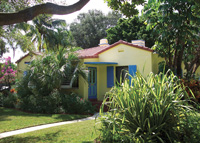
All legal Florida residents are eligible for a Homestead Exemption on their homes, condominiums, co-op apartments, and certain mobile home lots if they qualify. The Florida Constitution provides this tax-saving exemption on the first and third $25,000 of the assessed value of an owner/occupied residence. While a complicated formula is used to explain this -- as the additional $25,000 only applies to the non-schools portion of your tax bill -- the bottom line is that the basic homestead exemption saved a Broward homeowner in 2024 anywhere from $652 to $1,005 (depending upon your city's millage rate) in annual tax savings for all homes with a value of $75,000 or higher.
You are entitled to a Homestead Exemption if, as of January 1st, you have made the property your permanent home or the permanent home of a person who is legally or naturally dependent on you. By law, January 1 of each year is the date on which permanent residence is determined.
You may file for 2026 Homestead ONLINE by clicking the large yellow button in the navigation menu on the top left side of this page ... or you may file by visiting our office or at any of our Mobile Exemption Education Team events held throughout Broward.
The timely filing period for Homestead Exemption for 2026 is March 4, 2025 through March 2, 2026. The absolute deadline to LATE FILE for any 2026 exemption -- if you miss the March 2 timely filing deadline -- is September 18, 2026. State law (Sec. 196.011(8), Fla. Stat.) does not allow late filing for exemptions after this date, regardless of any good cause reason for missing the late filing deadline.
 The timely filing period for Homestead Exemption for 2027 is March 3, 2026 through March 1, 2027.
The absolute deadline to LATE FILE for any 2027 exemption -- if you miss the March 1 timely filing deadline -- is September 20, 2027.
State law (Sec. 196.011(8), Fla. Stat.) does not allow late filing for exemptions after this date, regardless of any good cause reason for missing the late filing deadline.
The timely filing period for Homestead Exemption for 2027 is March 3, 2026 through March 1, 2027.
The absolute deadline to LATE FILE for any 2027 exemption -- if you miss the March 1 timely filing deadline -- is September 20, 2027.
State law (Sec. 196.011(8), Fla. Stat.) does not allow late filing for exemptions after this date, regardless of any good cause reason for missing the late filing deadline.
IMPORTANT NOTE REGARDING TAX YEAR 2025 EXEMPTION DEADLINES: March 3, 2025, was the deadline to timely file for 2025 exemptions. Section 196.011(8), Florida Statutes, required ALL late-filed exemption applications for 2025 be filed with the Property Appraiser by the September 17, 2025, statutory deadline. Once the September statutory "late-filing" deadline has closed, we cannot accept any more 2025 exemption applications, regardless of any good cause reason for missing the late filing deadline.
What You Need When Filing for Homestead
When filing an application you must bring the following items listed below. To claim 100% coverage, all owners occupying the property as Tenants in Common (i.e., proportional share co-owners) must file on jointly held property. In the case of a married couple ("Tenants by the Entirety") or Joint Tenants with Right of Survivorship ("JTRS"), any one owner may qualify for 100% coverage -- although it is always highly advisable to have all eligible owner-occupants to file.
-
Proof of Ownership:
In general, the recorded Deed or Co-op Proprietary Lease must be held in the name(s) of the individuals applying for Homestead. You do not need to bring a copy of the deed or co-op lease if the document has already been recorded in the Official Records of Broward County. If the PROPERTY IS HELD IN A TRUST, WE ALSO NEED EITHER A NOTARIZED CERTIFICATE OF TRUST OR A COMPLETE
COPY OF THE TRUST AGREEMENT. Note: Most taxpayers prefer to use the simple Certificate of Trust form, instead of submitting the entire trust for our review, as it better protects the privacy of your estate planning and other financial matters.
-
Proof of Permanent Florida Residence --
preferably dated prior to January 1 of the tax year for which you are filing
-- is established in the form of:
- FOR ALL APPLICANTS: Florida's Driver's License (or -- for non-drivers only -- a Florida I.D. Card) is REQUIRED. Note: You must surrender to DMV any out-of-state regular driver's license.
You MUST also have either of the following:
- Florida Voter's Registration; or
- A power or water utility bill for the property in at least one owner's name.
- FOR NON-US CITIZENS, you MUST have the items listed above AND proof of permanent residency, asylum/parolee status (or other "PRUCOL" status); OR proof you are the parent of a US-born (US Citizen) minor child who resides with you.
- FOR ALL APPLICANTS: Florida's Driver's License (or -- for non-drivers only -- a Florida I.D. Card) is REQUIRED. Note: You must surrender to DMV any out-of-state regular driver's license.
You MUST also have either of the following:
- Only one Homestead Exemption: If you or your spouse have a Homestead Exemption on another property you currently own, whether in Broward County or in any other county or state (or an equivalent permanent residency-based exemption or tax credit, such as New York's "S.T.A.R." exemption), you will NOT be eligible for a Homestead Exemption in Broward County until after you cancel the exemption on the other property.
The State-approved application form requests certain information for all owners living on the premises and filing:
- Current employers of all owners
- Addresses listed on last I.R.S. income tax returns.
- Date of each owner's permanent Florida residence.
- Date of occupancy for each property owner.
- Social Security numbers of all owners filing.
- Social Security number of any married spouse of the applicant, even if the spouse is not named in the deed and is not filing).
Note: The amount of the homestead exemption protection granted to an owner residing on a particular property is to be applied against the amount of that person's interest in the property. This provision is limited in that the proportional amount of the homestead exemption allowed any person shall not exceed the proportionate assessed valuation based on the interest owned by the person. For example, assuming a property valued at $40,000, with the residing owner's interest in the property being $20,000, then $20,000 of the homestead exemption is all that can be applied to that property. If there are multiple owners, all as joint tenants with rights of survivorship, the owner living at property filing receives the full exemption.
For more info about the exemptions listed below, please contact our Customer Service & Exemptions Division: |
$5,000 Disability Exemption: One letter or certificate from a Florida-licensed physician, the US Department of Veterans Affairs or its predecessor, or the Social Security Administration certifying that you are totally and permanently disabled. You must be a bona fide Florida resident.
$5,000 Disability Exemption for Blind Persons: A certificate from the Division of Blind Services of the Department of Education or the United States Department of Veterans Affairs certifying the applicant to be blind is required. You must be a bona fide Florida resident.
$5,000 Exemption for Widowed Persons: Spouse's death certificate, newspaper clipping or memorial card. You must be a bona fide Florida resident.
Additional Low-Income Senior Exemption: Filing period is January 1 through March 1 of each year. Applicant must be 65 years of age or older as of January 1 (even if other household members are under age 65), have the Homestead Exemption on the property, and the total household adjusted gross income for last year (2025) must not exceed $37,694 (based on the income limitation set for last year - please note this adjusted gross income limitation number will be adjusted by the end of January for the 2026 tax year to reflect the percentage change in the average cost of living index). This exemption must be applied for annually (and the annual renewal process is fast and easy). For additional information, please click here.
$5,000 Veteran's Disability Exemption: A copy of your Certificate of Disability from the U.S. Government or the U.S. Department of Veterans Affairs (or its predecessor agency). The disability must be military service-related and incurred during a period of wartime service or by misfortune. The service-related disability must be to a degree of at least 10% before January 1. The surviving spouse of an eligible disabled veteran may also claim this exemption, provided he/she has not remarried.
Full Exemption for Veteran's Service-Connected Total and Permanent Disability: A certificate from the US Government or US Department of Veterans Affairs. Any honorably discharged veteran with a service-connected total and permanent disability, surviving spouses of qualifying veterans and spouses of Florida resident veterans who died from service-connected causes while on active duty as a member of the US Armed Forces are entitled to an exemption on real estate used and owned as a homestead.
Deployed Military Exemption: US military documentation which clearly shows the applicant's dates of active duty military service deployed outside the United States during the immediate prior year in support of one of the designated military operations (Operation Noble Eagle, Operation Joint Task Force Bravo, Operation Joint Guardian, Operations in the Balkans, Operation Nomad Shadow, Operation U.S. Airstrikes Al Qaeda in Somalia, Operation Copper Dune, Operation Georgia Deployment Program, Operation Spartan Shield, Operation Inherent Resolve, Operation Atlantic Resolve, Operation Freedom's Sentinel, Operation Resolute Support, Operation Juniper Shield, Operation Pacific Eagle, Operation Martillo, Operation Enduring Freedom – Horn of Africa, and Operation Reassurance Initiative/European Deterrence Initiative or in support of a subordinate operation to any of the preceding). This exemption requires the holder to submit new supporting documentation each year to retain these valuable savings. This exemption grants total exemption to an additional percentage of your assessed value, based upon the percent of the prior year you were deployed overseas in support of one of the specified military operations.
DEPLOYED MILITARY EXEMPTION (Form DR-501M). Must be filed annually if the owner holds homestead and was on active military duty in the prior year outside of the United States borders in support of a designated military operation.Additional Exemption for Combat-Wounded Florida Disabled Veterans: This exemption provides an additional discount from the amount of property taxes on the homestead of a partially or totally permanently disabled veteran, age 65 or older as of January 1, and whose disability was combat-related. Under this law, an eligible veteran will receive a total exemption from property taxes equal to the percentage of combat-related disability. The property appraiser shall first ascertain all other applicable exemptions, including exemptions provided pursuant to local option, and deduct all other exemptions from the assessed value. The percentage discount portion of the remaining value which is attributable to service-connected disabilities shall be subtracted to yield the discounted taxable value. Please provide us with documented proof your disability was combat related, and a certificate from the US Government or US Department of Veterans Affairs attesting to the percentage of your permanent disability. Note: Beginning January 1, 2021 Florida law shall extend this exemption to surviving spouses of combat disabled veterans. Click here for Application for Additional Exemption for Veterans Age 65 and over with a combat-related disability (DR-501DV).
Full Exemption for Totally and Permanently Disabled Persons: Certificates from two licensed doctors of this state or a certificate from the US Department of Veterans Affairs. To be entitled to this exemption, you must be a (1) quadriplegic or (2) paraplegic, hemiplegic or other totally and permanently disabled person who must use a wheelchair for mobility or who is legally blind. For persons entitled to this exemption under number two (2) above, the prior year (2025) gross income of all persons residing in or upon the homestead shall not exceed $36,745 (based on the income limitation set for last year - please note this adjusted gross income limitation number will be adjusted by the end of January for the 2026 tax year to reflect the percentage change in the average cost of living index). This amount is adjusted annually and a statement of gross income must accompany the application.
Full Exemption for Totally and Permanently Disabled First Responders: Any homesteaded property owner who is totally and permanently disabled as a result of injuries sustained in the line of duty while serving as a federal officer or first responder with a Florida, or their un-remarried surviving spouse, is eligible for a full exemption on the ad valorem portion of their property taxes. A First Responder will need to submit the following documentation in order to qualify. Letter from Social Security Administration stating the applicant is totally and permanently disabled; and one physician certification attesting to the applicant's total and permanent disability which renders the applicant unable to engage in any substantial gainful occupation which will continue for life. If an applicant is not eligible for such Social Security Administration status, the applicant may provide a letter stating they are ineligible for such status; and two physician certifications, from unrelated physicians, attesting to the applicant's total and permanent disability which renders the applicant unable to engage in any substantial gainful occupation which will continue for life. A certificate from the organization that employed the first responder at the time the injury or injuries occurred. The employer certificate shall be supplemented with documentation of the incident or event which caused the injury, such as an accident or incident report.
Click for First Responder's Physician Certificate of Total and Permanent Disability. Click for First Responder's Employer Certification of Injury.Surviving Spouse of Military Veteran or First Responder: Grants full homestead property tax relief to the surviving spouses of military veterans who die from service-connected causes while on active duty, and to the surviving spouses of police, fire fighters and other first responders who die in the line of duty. In short, the surviving spouses deemed eligible will not pay any property taxes. First responders are defined as law enforcement officers, correctional officers, firefighters, emergency medical technicians and paramedics. The exemption covers full-time, part-time or volunteer first responders. Surviving spouses of veterans or first responders who died years ago can apply for eligibility retroactively, although the tax relief is for future taxes only; they will not receive refunds for any past taxes paid. Applicants must provide a copy of the first responder's death certificate as well as an obituary, news article, statement from employing agency or other verification of line of duty death.
"Granny Flat" Exemption - Taxpayers who build additions onto an existing Homestead or perform extensive renovations to an existing Homestead to provide living quarters for a parent or grandparent may be entitled to a special exemption equal to the amount of the new construction (up to 20% of the homestead value). To be eligible, the property owner must have a Homestead Exemption on the property where the parent or grandparent quarters are constructed. The construction or reconstruction must be properly permitted and comply with all local land development regulations. Copies of all permits, certificate of occupancy, and plans must be submitted to the Property Appraiser’s Office. Construction or reconstruction must be substantially complete before January 1st of the year in which the reduction is requested. Application must be filed with the Property Appraiser’s Office annually on or before March 1st of each year. The occupant(s) of the quarters must be a parent or grandparent. The occupant(s) must be at least 62 years of age by January 1st of the year in which the reduction is requested. The occupant(s) must permanently reside on the property on or before January 1st. of the year in which the reduction is requested. The occupant(s) cannot receive any benefits requiring a declaration of permanent residency on any other property in any other County or State. The Broward County Property Appraiser’s Office will conduct a site visit annually upon review and prior to approval of the application for assessment reduction. You may download the Granny Flat application here (PDF format).
For more info about the Granny Flat Exemption, please contact
Manager Karen Loos: or call 954.357.6892Historic Property Exemption - Is your property on the National or Florida Registers of Historic Properties? Then, under certain circumstance, you may be entitled to some special exemptions related to your assessed value. Click here (for historic properties in general) and here (for historic properties open to the public) to read the applicable statutes. Click here to download the historic property exemption application form (PDF format).
For more info about the Historic Property Exemption, please contact
Manager Karen Loos: or call 954.357.6892Non-Profit, Religious, Educational & Governmental Exemptions - Click here to learn more.
Homestead Exemptions are NOT Transferable ... But You Can Move Your Savings with Portability AND a new Homestead Application
Homestead Exemption does not transfer from property to property. If you had this exemption last year on another property and moved, you must file a new application for your new residence. Notify the Property Appraiser to cancel the exemptions on your former home. The sellers' exemptions will not carry over beyond the year of the sale: you MUST apply for your own exemptions.
Florida's Portability law allows property owners to transfer their “Save Our Homes” benefit earned on a previous Homestead property to their new Homestead property. Beginning January 1, 2021, if you are applying for a new Homestead Exemption AND you held a Homestead Exemption on a previous property within the last 3 tax-years anywhere in Florida, you should also submit a Portability application with your Homestead application. Prior to January 1, 2021, the timeframe extended only two tax years. Note: A Portability application transfers any tax savings you have earned, but it does NOT transfer your Homestead Exemption from one property to another. You MUST first apply for a Homestead Exemption in order to be eligible for Portability. Click here to begin the online Homestead application process and you will automatically be prompted to print and complete a Portability application if your application information indicates you held an eligible Homestead Exemption on a previous Florida property.
For more info about Portability, please contact |
Receipts, Renewals, and Changes that Cause Ineligibility.
After your initial application for the Homestead Exemption has been made and the exemption has been granted, a receipt will be mailed to you each year in early January to verify that the status, use and ownership has not changed.
If you do
not receive this renewal receipt from us by March 1, failure to  contact this
office may result in the loss of your Homestead Exemption for the year
contact this
office may result in the loss of your Homestead Exemption for the year
A new application is required if your property has been sold or otherwise disposed of, or the ownership or use changes, or when the holder(s) of the Homestead Exemption ceases to reside on the property as a permanent resident.
This annual Homestead Renewal Receipt does not pertain to any of the other exemptions and/or classifications.
If you no longer qualify: The law requires YOU to notify the Property Appraiser's office to remove that exemption by March 1. Strong penalties -- going back as far as ten years of back taxes, plus 50% penalties and 15% interest -- may be imposed on those who do not tell the Property Appraiser to remove exemptions for which they are no longer qualified. Here are a few examples:
- If you have rented out your property, you would likely forfeit your right to claim a Homestead Exemption (click here to view the applicable statute).
- If you were receiving an exemption for widowed persons and remarry, you would no longer be entitled to that exemption.
- If the homesteaded owner dies and the property continues to claim the exemption in future years in the name of the deceased owner.
- You change your voter registration and driver's license to another residence.
- If you or your married spouse is simultaneously claiming homestead (or any other permanent-residency based tax exemption or credit) on any other property anywhere else in the world.
Homebound/ADA Outreach Program
Homebound persons and other qualified individuals with disabilities who cannot readily leave their home to visit one of our offices may also file for a Homestead Exemption. Please call: 954.357.5579 to arrange for a visit from our Homebound Outreach Program.
For more info about Mobile Exemption Education Team activities, please contact |
|
Privacy Policy Having trouble viewing our website? Please contact our accessibility hotline for assistance at accessibility@bcpa.net or call 954-357-6830. Source: Broward County Property Appraiser's Office - Contact our office at 954-357-6830. Hours: We are open weekdays from 8 am until 5 pm. Legal Disclaimer: Under Florida law, e-mail addresses are public records. If you do not want your e-mail address released in response to a public records request, do not send electronic mail to this entity. Instead, contact this office by phone. Information provided on this website is for tax roll purposes only and may not be appropriate for other uses. Values are not final until certified pursuant to Florida law. |